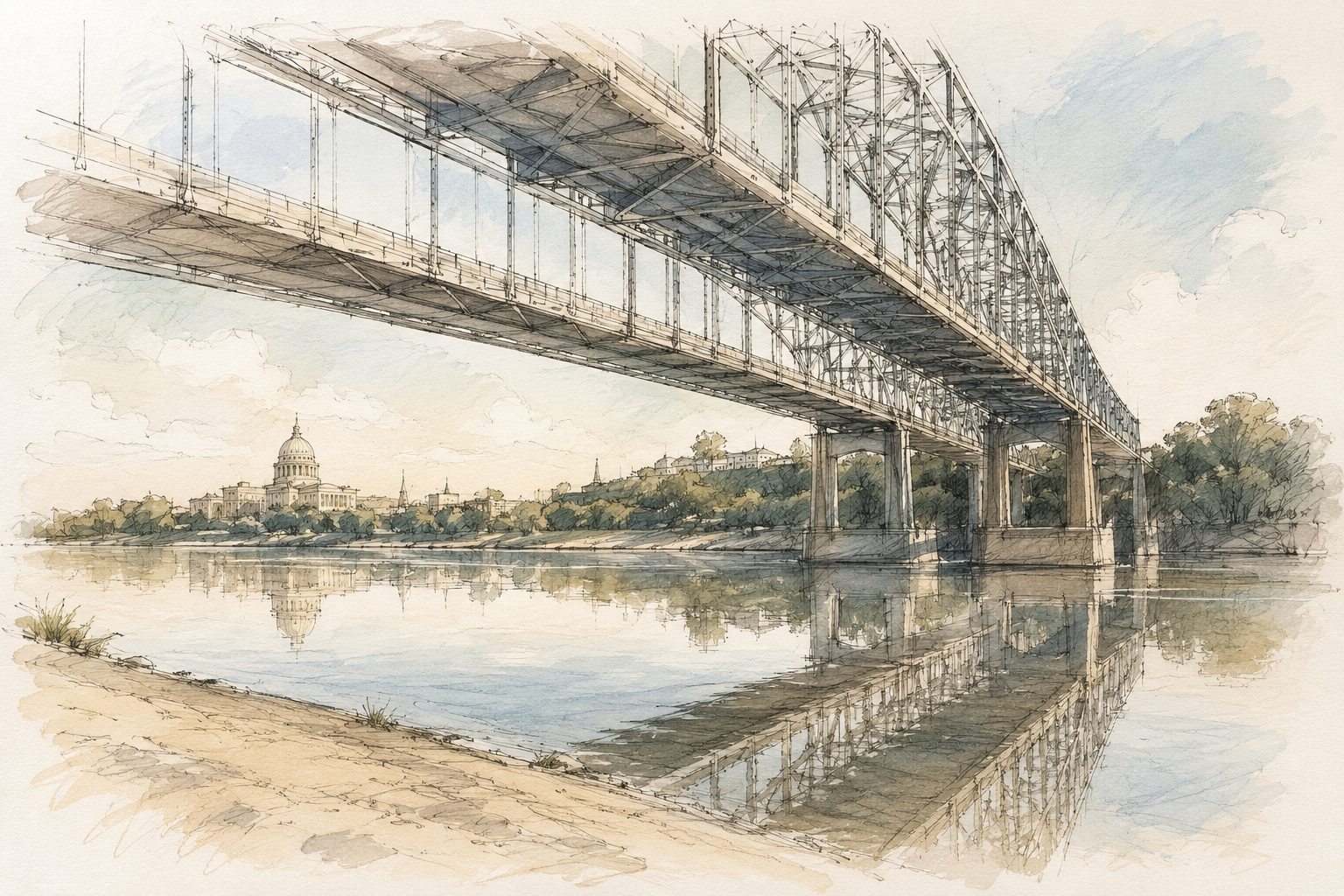
People hear "state capital" and picture a sprawling, sterile city of government buildings. Jefferson City is the opposite. With a population just under 43,000, it's small enough to feel like a town instead of a metro, and that's exactly what makes it work.
I live and work here, so when buyers from out of state ask me what it's actually like, I give them the straight answer instead of the Chamber-of-Commerce brochure. Here's the real picture.
The Vibe
Downtown sits on a bluff over the Missouri River, with the State Capitol dome visible from almost everywhere. High Street, the main drag, has been quietly revitalizing for years, with coffee shops, restaurants, and shops mixed in among century-old buildings. On a Wednesday afternoon when the legislature is out of session, it feels less like a state capital and more like a Midwestern town that happens to have a really impressive government building.
Outside of the few weeks the legislature is in session, the political energy stays in the background. Most residents work in healthcare, manufacturing, education, or state government, but the city itself doesn't feel "political" the way DC or even Sacramento does.
Where People Live
Jefferson City breaks down into a few distinct areas:
- Old Munichburg (south of downtown): Historic German neighborhood with brick streets, century-old homes, and walkable charm. Beer hall heritage still visible in the architecture.
- Downtown / High Street corridor: Mix of historic homes, lofts above shops, and renovations. Good for people who want walkability.
- South side / Capital Mall area: Newer construction, more space, family-friendly, closer to retail and the Katy Trail.
- East side: More affordable, mix of older ranches and new builds.
Median home prices typically run in the $200,000s, which buys you considerably more house here than in Columbia, Kansas City, or St. Louis.
The Practical Stuff
- Commute distances: 30 minutes to Columbia, about 2 hours to St. Louis, about 2.5 hours to Kansas City. JC sits roughly equidistant from both major Missouri metros.
- Climate: Four real seasons. Hot, humid summers. Cold winters with reliable snow. Long, comfortable shoulder seasons.
- Cost of living: Below the national median and notably below the KC or STL metros. Housing is the biggest savings, but groceries, utilities, and services all run lower too.
- Outdoors: The Katy Trail State Park runs right through town, with 240 miles of converted rail-to-trail along the river. Binder Park, Runge Conservation Nature Center, and easy river access mean outdoors is built into daily life, not a weekend trip.
What Surprises New Residents
The same observations come up repeatedly when people relocate here:
- How small it actually feels despite being the capital. You'll see the same faces at the grocery store within a month.
- The food scene punches above its weight, with more good independent restaurants than the population would suggest.
- No traffic in the conventional sense. "Rush hour" lasts about 20 minutes.
- The Capitol building lit up at night. It never stops being a great view.
The Housing Market Right Now
Inventory has tightened over the last few years, but Jefferson City remains a market where buyers can still get in without bidding tens of thousands over asking. Well-priced homes tend to move within 2 to 4 weeks. The most competitive segments are family homes in the south-side school zones and renovated character homes in Old Munichburg.
Is Jefferson City Right for You?
JC is a great fit if you want a slower pace, a real four-season climate, affordable housing without sacrificing amenities, and a strong sense of community. It's a less great fit if you want big-city dining, professional sports in your backyard, or the kind of nightlife that runs past midnight.
If you're considering a move here and want a straight read on the neighborhoods, the schools, or the market, reach out. I live here, I work here, and I'm happy to give you the honest answer, including telling you if JC isn't actually what you're looking for.